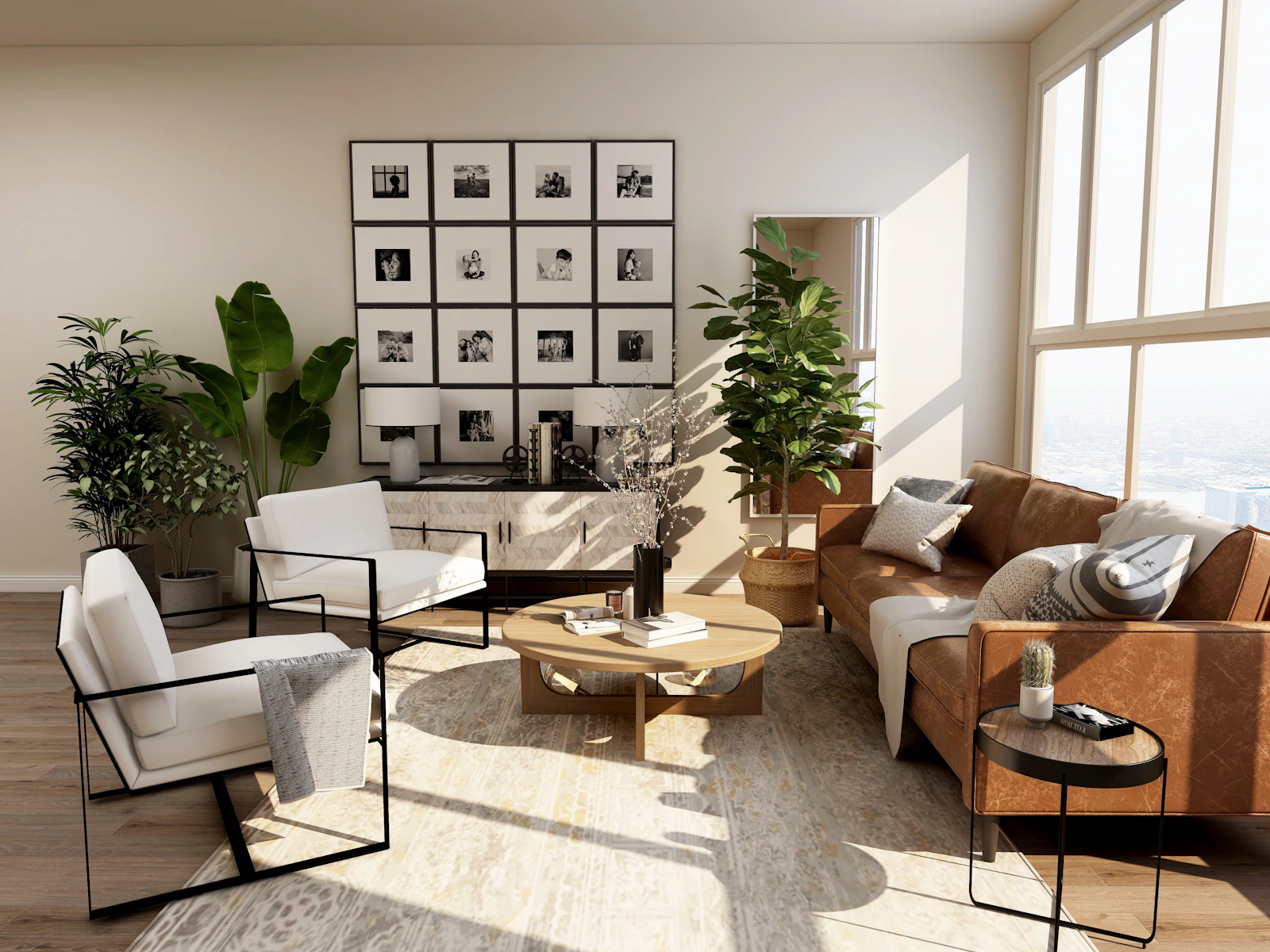
The most beautiful room at home is often the one that catches the last light of the day. Walls turn creamy, corners soften and ordinary objects develop a little theatre. You cannot ask the sun to stay, but you can design the room so its mood does not disappear as soon as evening arrives. Layered lighting is the way to do it.
Instead of depending on one ceiling fixture, think of lighting as a small landscape. There is a broad layer that lets you move around, a focused layer that helps you read or work, and a low, atmospheric layer that makes the room feel held. When each source has a job, you can switch off what you do not need and keep the atmosphere intact.
Begin with the room at night
Turn off every light and walk through the space with a lamp or your phone torch. Notice where you instinctively want more visibility: the entrance, the kettle, the stairs, the reading chair. Then notice where a little shadow feels lovely. A room is not meant to be evenly lit. Shadows create depth, and depth is part of comfort.
Make a quick map with three notes: “need to see,” “nice to see” and “happy in the dark.” The first category gets practical light. The second gets accent or reflected light. The third should be protected from glare. This exercise prevents the common mistake of treating every dark corner as a problem to solve.
Light should help the room change pace, not force it to stay awake.
Layer one: ambient light
Ambient light is the room’s general wash. It may come from a pendant, a flush ceiling fitting, wall lights or daylight bouncing from pale surfaces. Its job is to make the room navigable, not to provide all the atmosphere. If the only source is a bright fixture overhead, the room can feel flat and every face is asked to stand under a spotlight.
If you have a central ceiling light, put it on a dimmer if possible and choose a shade that softens the bulb. Opal glass, linen and paper spread light more gently than clear glass. A shaded fixture also creates a visual object when it is switched off, which means it contributes to the room in two ways.
For a rental or a room without much wiring, use plug-in wall lights, a tall floor lamp or a pendant with a long textile cord. Place the cable deliberately along a wall or behind furniture. A practical solution looks calmer when it appears intentional.
Layer two: task light
Task lighting follows the things you actually do. Put a lamp beside the chair where you read, not merely in the corner that looks empty. Light the kitchen worktop from in front or above the task so your body does not cast a shadow across it. At a desk, aim for a pool of light that covers the page or keyboard without shining into your eyes.
Task lamps are an opportunity to bring in shape and material. A ceramic base adds weight to a pale room. A brushed metal arm introduces a small futurist note. A pleated shade brings softness. Choose a lamp that would still be worth keeping if its bulb were removed; it will remain part of the composition during the day.
Keep the scale generous enough for the job. Tiny decorative lamps are charming, but a light that cannot reach the page becomes visual clutter. Check the height from your seated position and use a warm, dimmable bulb so the task pool feels connected to the rest of the room.
Layer three: accent and reflected light
Accent light is where the mood enters. It can pick out a painting, wash a textured wall, glow behind a curtain or sit low on a shelf. The source itself does not need to be visible. A small lamp directed toward a wall often creates more atmosphere than one pointed into the room because the reflection is broad and quiet.
Use accent light to reveal something with a good surface: stone, ribbed glass, a leafy plant, a stack of art books. It is more effective to illuminate one beautiful material than to scatter weak light across ten objects. Try a tiny rechargeable lamp inside a bookshelf, a floor uplighter behind a plant, or a candle on a tray where you can see it from the sofa.
Mirrors can extend a pool of light, but place them so they reflect a glow rather than a bare bulb. The best reflection often shows a shade, a wall or a piece of foliage. That gives the room a second, softer version of the source.
Choose warmth with intention
Colour temperature changes the emotional temperature of a room. For living spaces, warm light is usually more forgiving and restful. Very cool bulbs can make cream walls look grey and wood look washed out. If you mix bulbs, keep them close enough in warmth that the room does not feel split into separate zones.
Look at the bulb, not just the fixture. A beautiful lamp with an exposed, high-output bulb may still create glare. Choose frosted or filament-style bulbs according to the shade and the viewing angle. If you can see the bright point from the sofa, lower it, diffuse it or redirect it.
Try a lighting rehearsal. Turn on only the ambient source, then add the task lamp, then the accent lamp. At each step ask what changed. The goal is not maximum brightness. The goal is a room that has enough light to support the next small thing: a conversation, a meal, a chapter, a slow tidy.
Make the switches part of the design
The best lighting plan is easy to use. Group lights by mood rather than by where they were installed. A “cooking” setting can bring up the worktop light; a “settle” setting can keep the pendant low and the lamps glowing; a “clean” setting can use everything briefly. Smart bulbs are useful, but simple dimmers and reachable switches can be just as elegant.
Place a small lamp near the entrance so you never have to cross a dark room to find the switch. Use timers for lights that welcome you home, but allow enough darkness for the room to rest when you do. A home feels more luxurious when the lighting responds to your rituals without asking you to manage a complicated system.
Let shadows stay
Resist the urge to fill every corner. A shadow behind a chair gives the chair a silhouette. Darkness beneath a console makes the floor feel quieter. The parts of the room you leave unlit become a frame for the parts you choose to show.
Layered lighting is less about buying more lamps than about giving each source a reason to exist. Put light where life happens, soften what is harsh, and keep a little darkness in the composition. Then, when the sun lowers, the room can change gracefully instead of switching on all at once. That is the golden-hour feeling worth designing for.