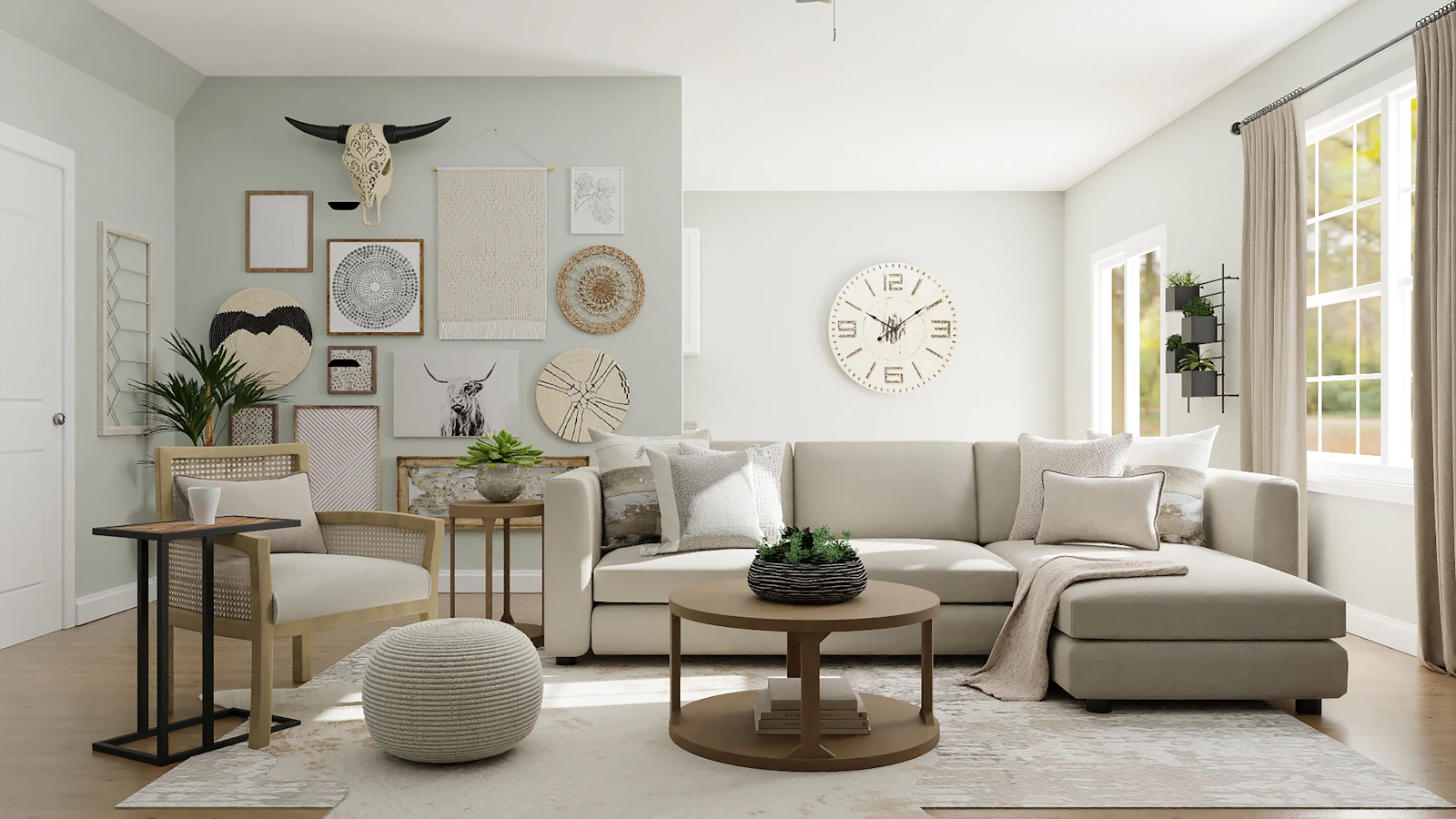
Small rooms are often asked to perform too many tricks. A living room becomes an office, a dining room, a guest room and storage unit. When every piece has to justify its footprint, decoration can feel like a luxury reserved for bigger homes. Soft futurism offers another way to think about the problem. It borrows the clarity of futuristic design—curves, clever flexibility, reflective surfaces—and softens it with warm light, tactile fabric and objects that feel good to live beside.
The result is not a spaceship. It is a room that feels a step ahead of clutter. Edges are easier to move around, furniture does more than one job, and the eye is encouraged to travel instead of stopping at a wall of stuff.
Protect the path through the room
The most spacious-looking small rooms usually have one thing in common: a clear route. Before buying a smaller sofa or adding another shelf, draw the path you take from the door to the window, kitchen or bathroom. Keep that route visually quiet. Furniture can sit beside it, but should not make you weave around corners.
Choose pieces with a little lift. A sofa on visible legs allows the floor to continue beneath it. A wall-mounted shelf keeps the area below open. A slim console can provide a landing spot without becoming a block. These small gaps are not wasted capacity; they give the room somewhere for light and air to go.
Use a tape measure and mark the footprint on the floor before committing. Walk around it with a laundry basket or open cupboard door. A piece can fit on paper and still make daily movement awkward. Comfort is a spatial measurement, too.
In a small room, breathing space is one of the most useful objects you can own.
Choose curves that guide the eye
Curved furniture is the easiest way to introduce soft futurism because it changes how the body moves through the room. A rounded coffee table, a crescent chair or an arched mirror removes the visual stop-start of a boxy layout. The eye follows a curve, which can make the room feel more continuous.
You do not need every piece to be rounded. One strong curve is often enough. Pair it with a straight line so the room does not become theme-park futuristic. A cylindrical lamp beside a rectangular sofa, or an oval table on a linear rug, creates contrast without clutter.
Mind the corners of the curve. A very deep round sofa may be beautiful but impractical in a tight room. Look for pieces with a softened front edge or a curved back that still keeps a compact footprint. The most successful shape is the one that makes movement easier, not merely the one that looks unusual.
Let one reflective surface expand the atmosphere
Glass, polished stone and metal can make a small home feel more open, but they work best as accents. A glass side table lets the rug remain visible. A smoked mirror can double a warm lamp without creating a bright, cold reflection. A brushed metal lamp adds a small flash that stops a neutral room from feeling sleepy.
Place reflective surfaces where they can catch something beautiful: a window, a plant, a soft lamp or a pale wall. Avoid reflecting a messy storage area or the television from every angle. A mirror should extend the room’s best view, not simply increase the amount of information in it.
Balance every sleek surface with something touchable. Pair a glass table with a wool rug, metal with linen, glossy tile with a timber stool. Soft futurism depends on that tension. Without it, the room can feel like a showroom; with it, the future feels habitable.
Give small rooms a calm colour architecture
Colour can create zones without building walls. Keep the largest surfaces close in tone, then give one area a deeper or warmer note. A clay-coloured niche can make a desk feel intentional. A muted lilac chair can define a reading corner. A soft green curtain can pull the window into the room rather than leaving it as a bright gap.
Use vertical colour to make the ceiling feel higher. Paint or paper the wall behind a tall shelf, hang curtains just below the ceiling, and keep the floor visually quiet. If the room is very compact, a single continuous tone often feels calmer than a collection of small feature walls.
Reflective and translucent materials are especially useful with colour. Tinted glass, a coloured acrylic tray or a glossy tile can carry a hue without adding visual weight. This is a gentle way to bring in a futuristic note while keeping the palette warm.
Make furniture quietly multifunctional
Multifunctional does not have to mean transformable furniture with complicated hinges. A stool can be a side table, extra seating or a plant stand. A deep window ledge can be a desk. A storage ottoman can hold blankets and become the most comfortable perch in the room. The best flexible pieces do not announce their cleverness.
Look for furniture that changes role without changing appearance. A round pedestal table can serve breakfast, emails and an evening drink. A narrow shelf can display art today and hold kitchen staples tomorrow. Keep the everyday version of the room easy. If changing the room requires a full rearrangement, the flexibility will stay theoretical.
Use closed storage for the visual basics and open storage for the things you genuinely want to see. A wall of exposed boxes creates a lot of small edges. Two generous doors, a curtain panel or one tonal cabinet often gives the eye a longer, calmer line.
Add atmosphere at a small scale
Lighting matters more in a compact room because every source is close to the eye. Use a ceiling fixture for general light, then add a low lamp and a wall wash. A small rechargeable light can sit on a shelf or move to the table when you need it. Choose shades that diffuse the bulb so the room feels luminous rather than busy.
Plants are another form of soft infrastructure. One tall, airy plant creates height and life; several tiny plants can become a collection of interruptions. Use a branch in a narrow vase if floor space is limited. The shape gives the room movement without demanding another piece of furniture.
Leave one surface unfinished
A small home should not be styled at maximum capacity. Leave one shelf partially empty, one wall with a single artwork, or one stretch of floor clear beside the window. That pause makes the objects you do choose feel more deliberate. It also gives you room to notice how the home changes over time.
Soft futurism is really a practice of reducing friction. Let curves make the path kinder, let reflective details carry light, and let each flexible piece earn its place by supporting more than one version of your day. The future we want at home is not flawless or full of gadgets. It is warm, adaptable and easy to return to.